_edited.jpg)
Sales and Marketing Were Never Supposed to Be Separate
- Thomas Ahern

- 7 days ago
- 4 min read
Why modern customers are forcing organizations to rethink trust, alignment, and the customer experience.
One of the biggest misconceptions I continue to see in growing organizations is the belief that sales and marketing operate as separate functions with separate responsibilities.
Marketing generates leads. Sales closes deals. Thats been the traditional model.
But the people we serve no longer experience companies that way. Today, someone will read articles on our website, watch videos, research competitors, read reviews, ask peers for recommendations, and compare you to other companies before talking to our sales team.
To them, every interaction is part of one connected experience that either builds trust or creates uncertainty. That's why the traditional divide between sales and marketing is outdated.
Having worked over the past several years as an Executive Coach at IMPACT, I’ve seen firsthand how effective sales and marketing integration can transform an organization’s performance. Not just revenue performance, but communication, accountability, trust, and the overall customer experience and company culture.
In many organizations, the separation between sales and marketing creates more than inefficiency. It creates inconsistency that impacts the brand.
Marketing believes sales is not following up. Sales believes marketing is attracting the wrong audience. Leadership struggles to understand why growth feels unpredictable despite investments in both departments.
Meanwhile, the people we serve are left trying to make sense of mixed messages, unclear expectations, and disconnected experiences.
In my experience, this is rarely just a sales problem or a marketing problem. It's usually an alignment problem. And increasingly, it is becoming a trust problem.

The Marketplace Has Changed Faster Than Most Organizations
For years, salespeople controlled much of the buying process because access to information was limited. If someone wanted answers, they often had to speak directly with a company rep.
That world no longer exists.
Today, people educate themselves long before they ever schedule a call. Recent research confirms that approximately 70% of the B2B buying journey is completed before a prospect speaks to sales. They compare options, research concerns, explore pricing, read reviews, and search for answers independently.
By the time someone reaches out, they aren't looking to be persuaded. They are looking for clarity and that fundamentally changes the role of both sales and marketing.
Both now share responsibility for helping people make informed, confident decisions. That is a very different model than most organizations were originally built around.
The Revenue Team Revolution
I believe we are in the middle of what I would call the Revenue Team Revolution. The organizations building the most trust today are the ones that break down walls between leadership, sales, marketing, customer education, and customer experience.
Why?
Because the people we serve experience all of it as one system. When departments operate independently, trust gaps appear quickly:
messaging becomes inconsistent
important questions go unanswered
sales conversations feel disconnected from the website experience
content fails to eliminate real concerns
teams protect their departments instead of establishing an education first mentality
But when we align around trust, education, and transparency, something changes. Marketing creates content that supports sales conversations. Sales teams begin using educational content to reduce uncertainty before trying to close a sale, and leadership gains better visibility into what people are actually asking, and struggling to understand.
This is where organizations begin evolving from siloed departments into a Revenue Team where both teams feel interdependent for success. Not sales versus marketing. Not leadership operating separately from customer facing teams. One aligned system focused on trust, clarity, education, and long term relationships.
The Most Trusted Organizations Educate Better
Another pattern I see is that the organizations earning the most trust are usually the ones doing the best job teaching the people they serve.
They aren't the loudest or spending the most on advertising. They are the ones that consistently help people understand what they need to know in order to make confident decisions. As a former educator, I have always believed that the organizations earning the most trust are the ones willing to teach openly, answer difficult questions honestly, and help people make informed decisions.
But, that requires alignment.
If marketing publishes content that sales never references, alignment is missing. If sales hears the same concerns repeatedly but leadership and marketing never address them publicly, alignment is missing. If leadership says trust matters while the comp plan reward pressure and short term results, alignment is missing.
Trust is not built through slogans. It's built through consistency. And consistency only happens when leadership, sales, and marketing are working from the same understanding of the customer experience.
The Future of Growth Is More Human, Not Less
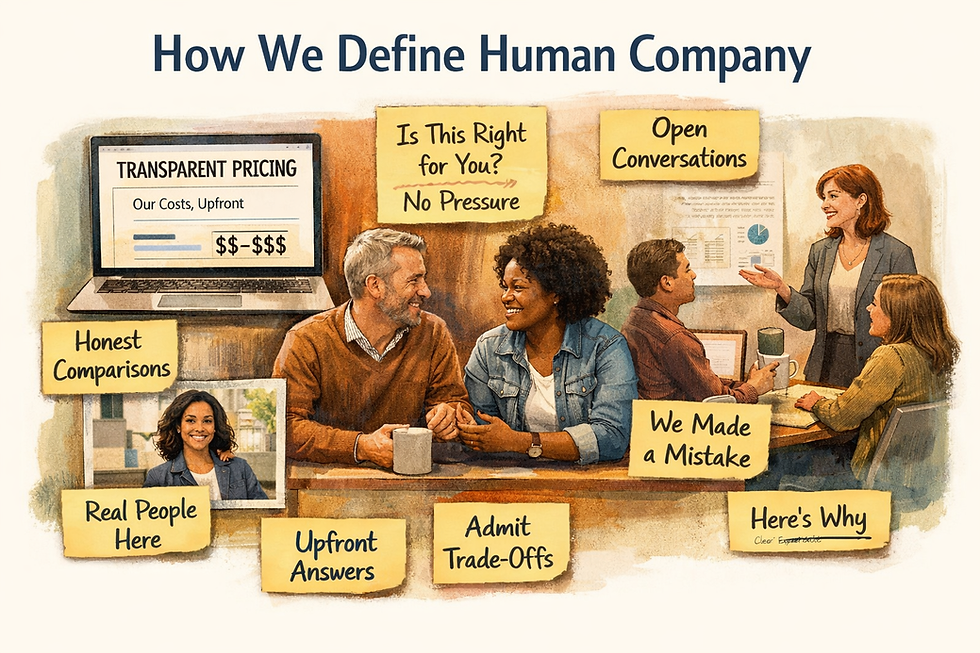
As AI and automation continue transforming sales and marketing, many organizations are becoming more efficient while unintentionally becoming less human. That creates risk. I recently published an article on how the most human company wins. You can find it here.
And, while technology may improve speed and scale, trust still drives decisions. In fact, the more automated the marketplace becomes, the more people tend to value clarity, authenticity, transparency, and just real, genuine guidance.
The organizations that continue treating sales and marketing as separate functions will increasingly struggle to build trust in a marketplace where customers experience everything as one connected journey.
Sales and marketing were never supposed to be separate and modern customers are simply forcing us to recognize it.
Thomas Ahern is the founder of Your Sales Consultant and Executive Coach at IMPACT. He works with leadership teams to align sales, marketing, trust, and culture to drive sustainable growth.


Nice perspective